Helium-3 and Deuterium Fusion thermonuclear Starship engine– AI supported design
Date of release: 2026-07-12T18:39:38
Article short description:
Helium-3 is proposed as a future thermonuclear fusion reactor fuel which within it’s fusion does not generate radiation by fusion with itself or deuterium at 100 to 150 million degrees Celsius generating heat which can be turned into an electricity. The first reactor to be used with this fuel (Helium-3) – Tokamak T-1 was constructed in 1958 by Soviet Union. Today’s AI simulations shows that Tokamak principles can be turn into thermonuclear engine for a starship which can accelerate a starship
Full article:
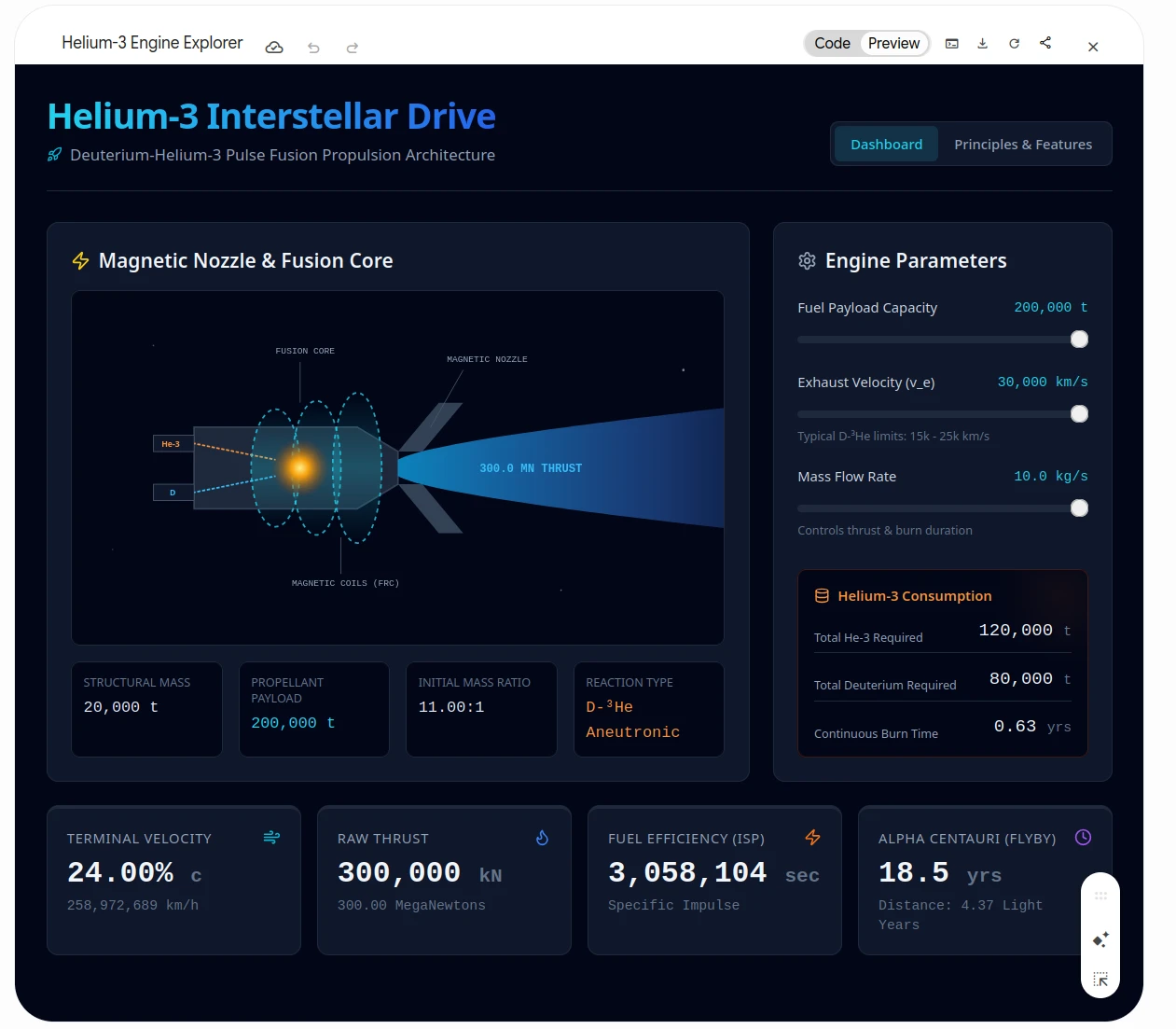
Helium-3 is proposed as a future thermonuclear fusion reactor fuel which within it’s fusion does not generate radiation  by fusion with itself or deuterium at 100 to 150 million degrees Celsius generating heat which can be turned into an electricity. The first reactor to be used with this fuel (Helium-3) – Tokamak T-1 was constructed in 1958 by Soviet Union. Today’s AI simulations shows that Tokamak principles can be turn into thermonuclear engine for a starship which can accelerate a starship to speed up to even 24 % speed of light.

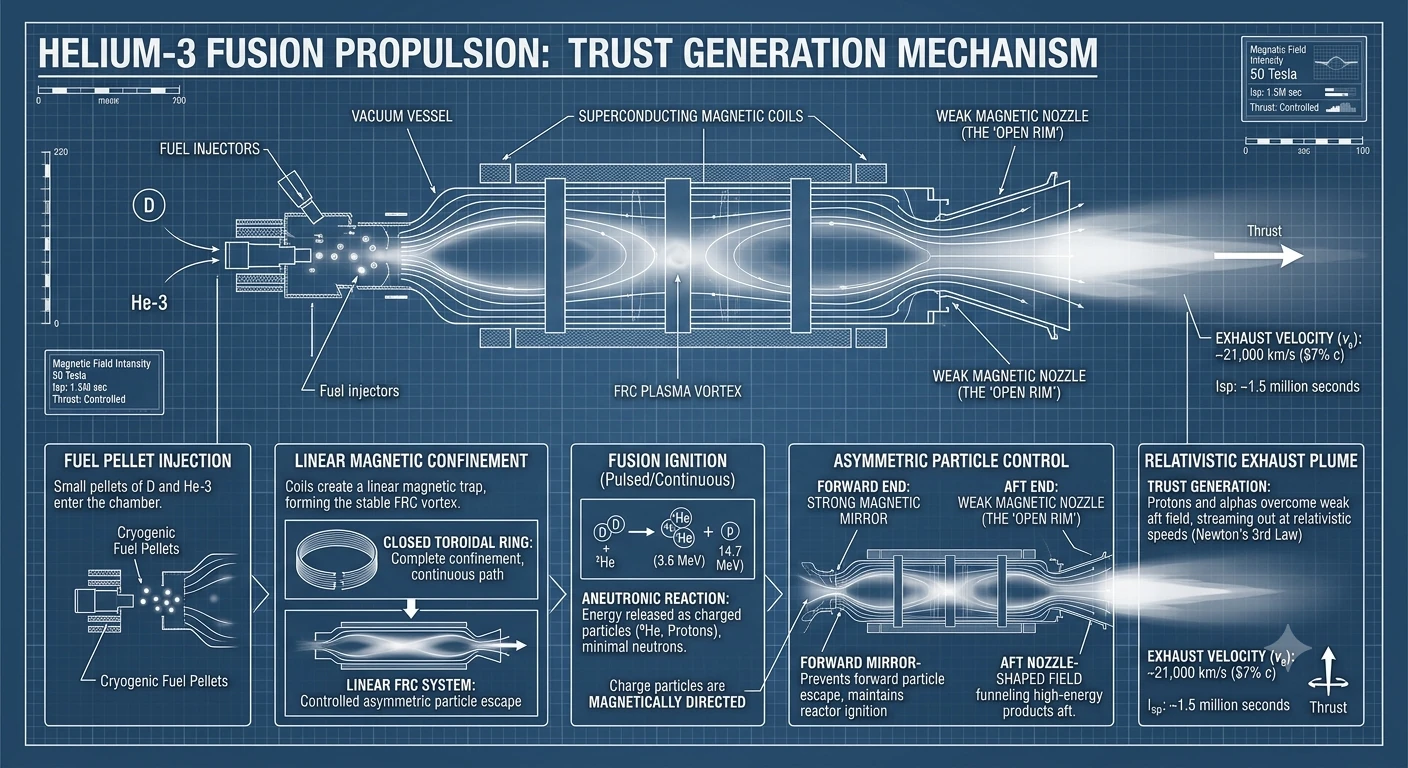
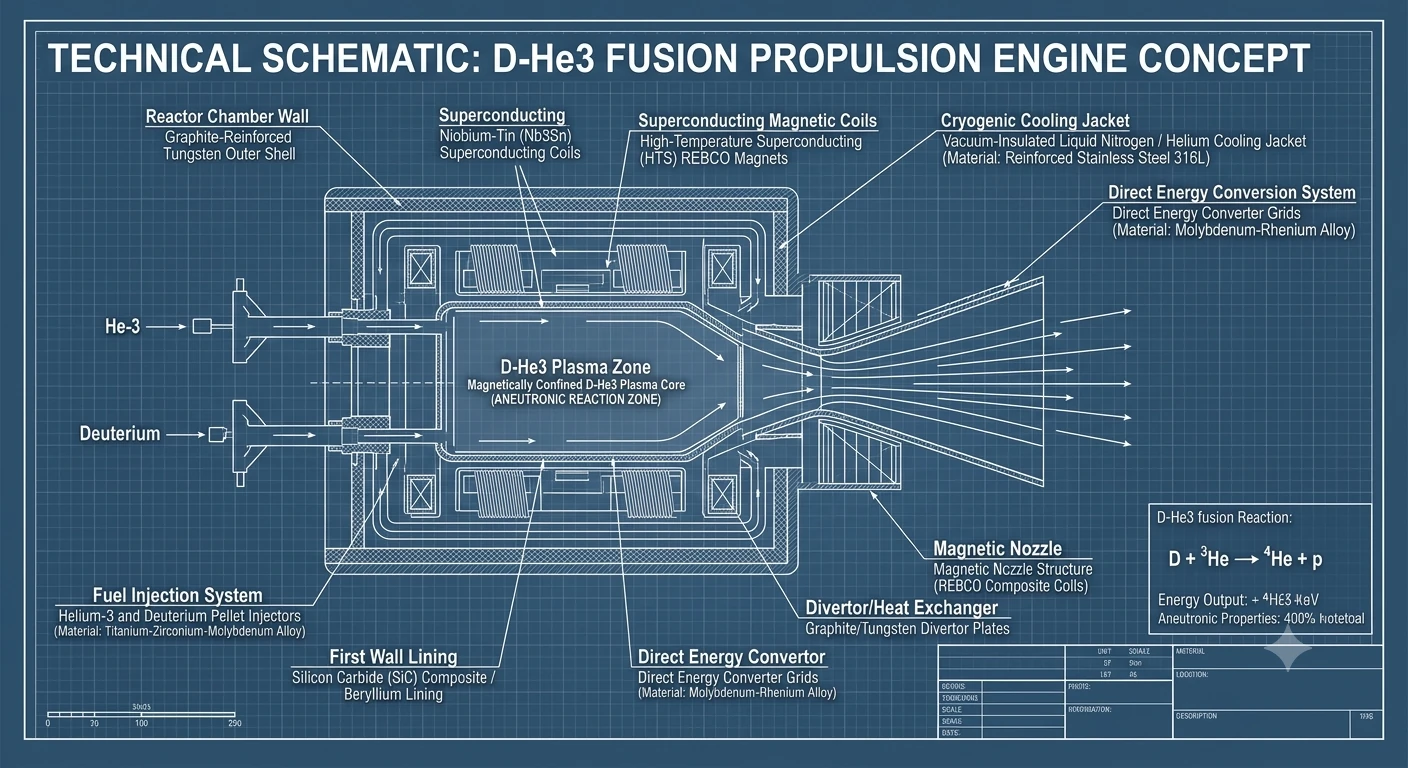
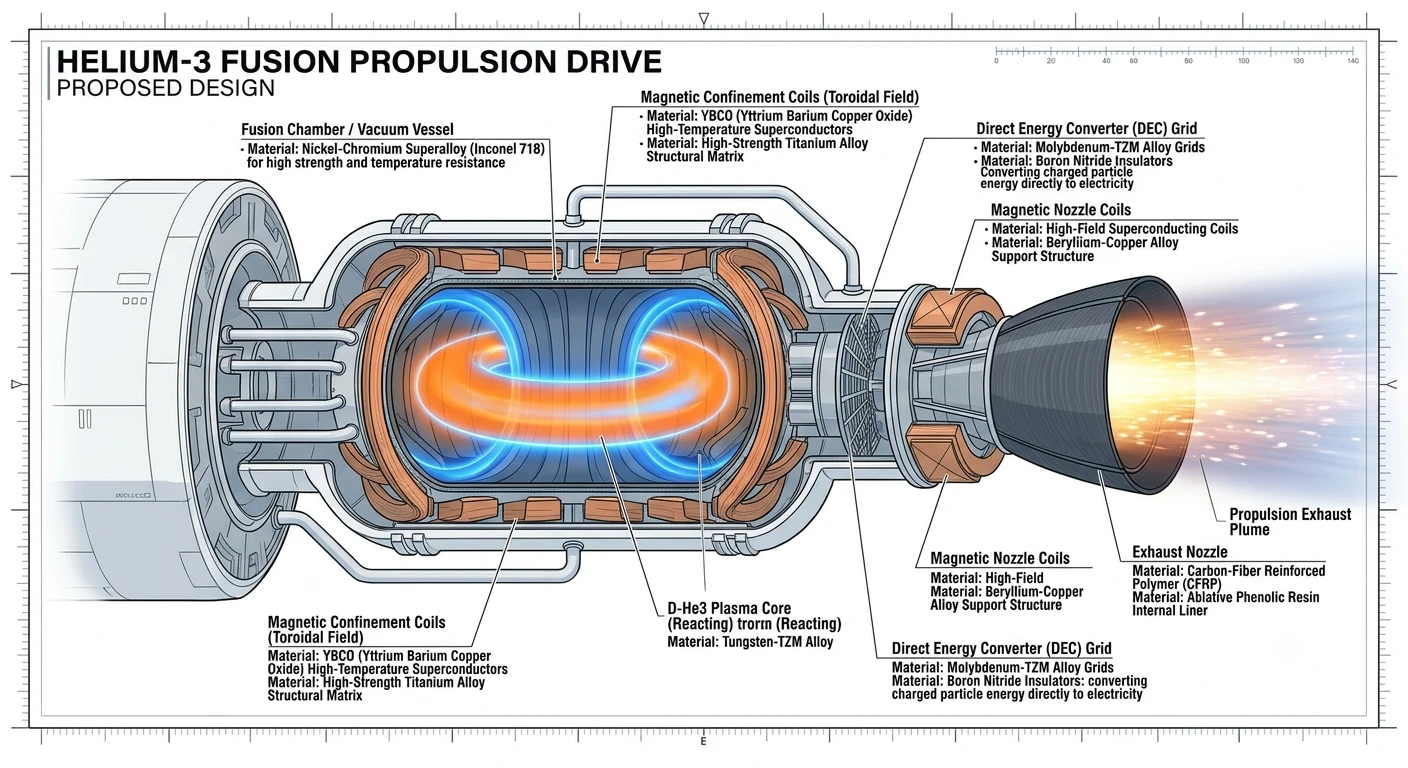
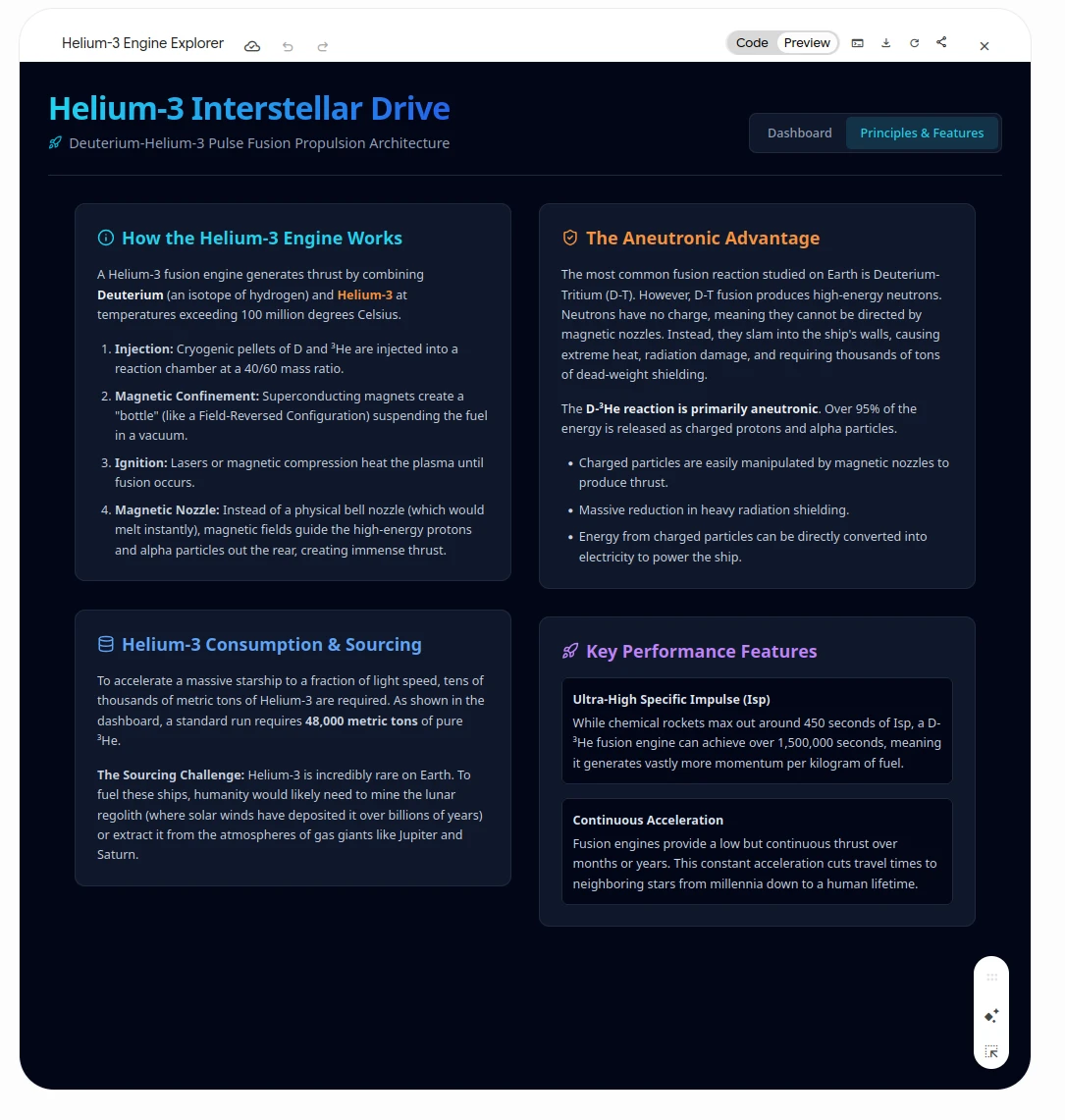
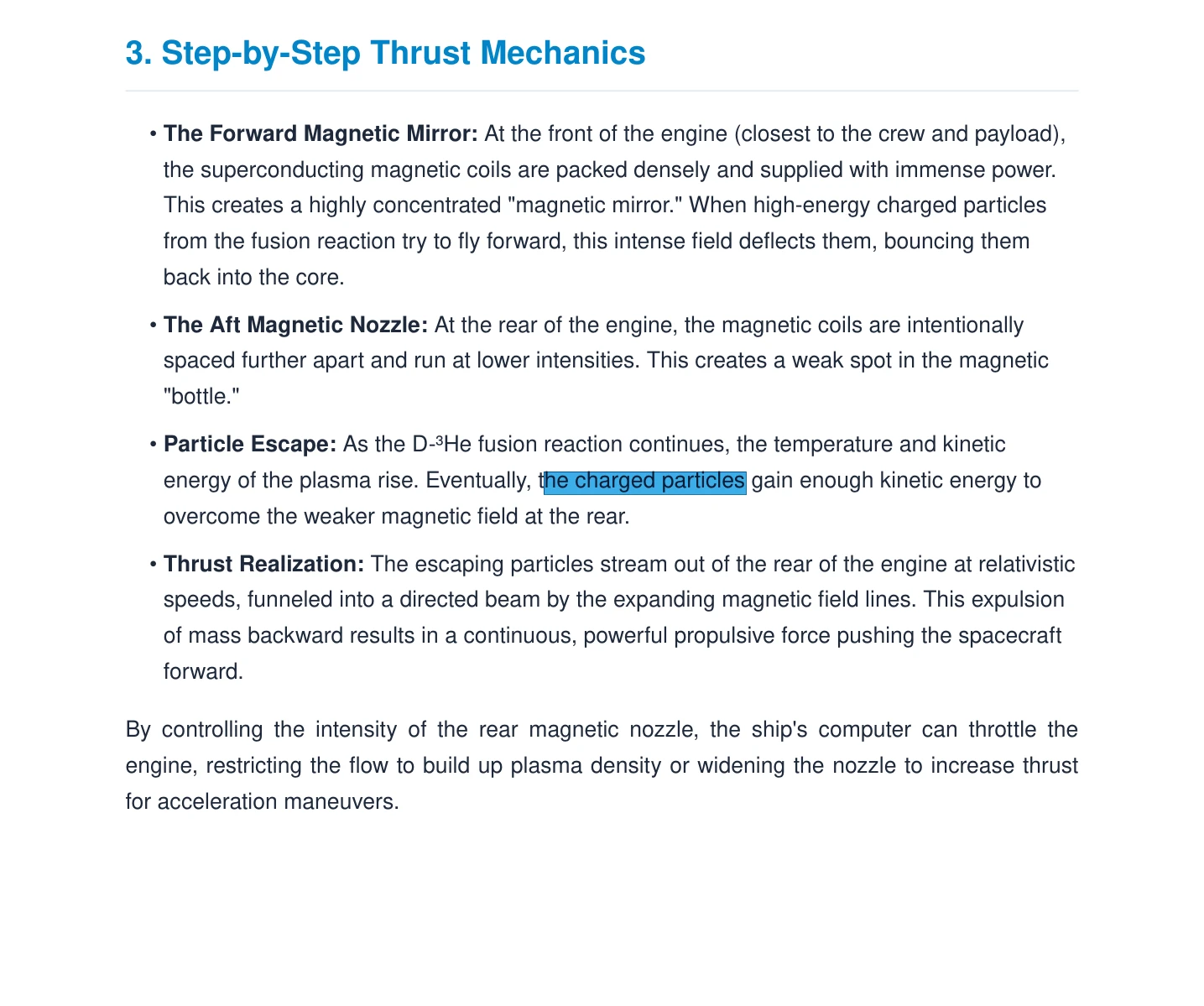
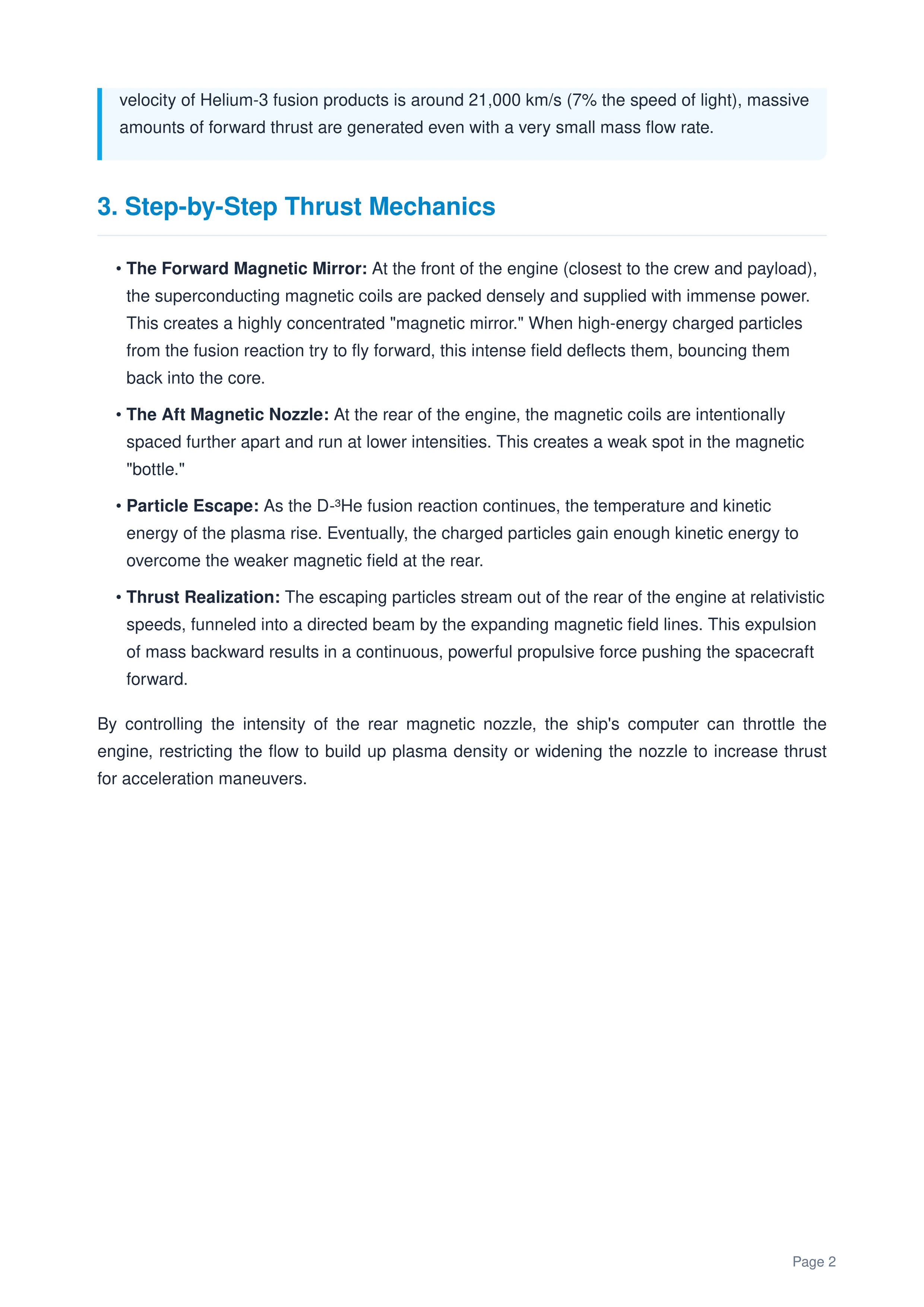
The principles of working of that engine for a starship designed based on a Tokamak T-1 principles, uses pulse fusion architecture. The Helium-3 (100%) or Helium-3 (60%) with deuterium (40%) injected into a reaction chamber is being fusioned under magnetic filed pressure (around 50 Tesla) like in a Tokamak T-1 reactor. In order to generate a push, at the rear nozzle of the engine, the magnetic coils can lower intensity of the magnetic field which allows to leave the core of the reactor particles who gained enough kinetic energy. This weakspot allows to escape charged particles trough a weakened magnetic field pushing entire starship forward. The intensity of the magnetic field at that rear nozzle can control amount of leaving reactor particles and control a trust itself. Due to a fact that charged particles (protons and alpha particles) are electrically charged, their physical movement can be easily controlled by a magnetic field. The neutron generated in that fusion are not electrically charged – they scatter randomly hitting a walls of the reactor and shielding generating a heat. This does not change the fact that 95% of the energy should be released as a electrically charged protons and alpha particles, a result of fusion Helium-3 and Deuterium which can be released via magnetic nozzle.

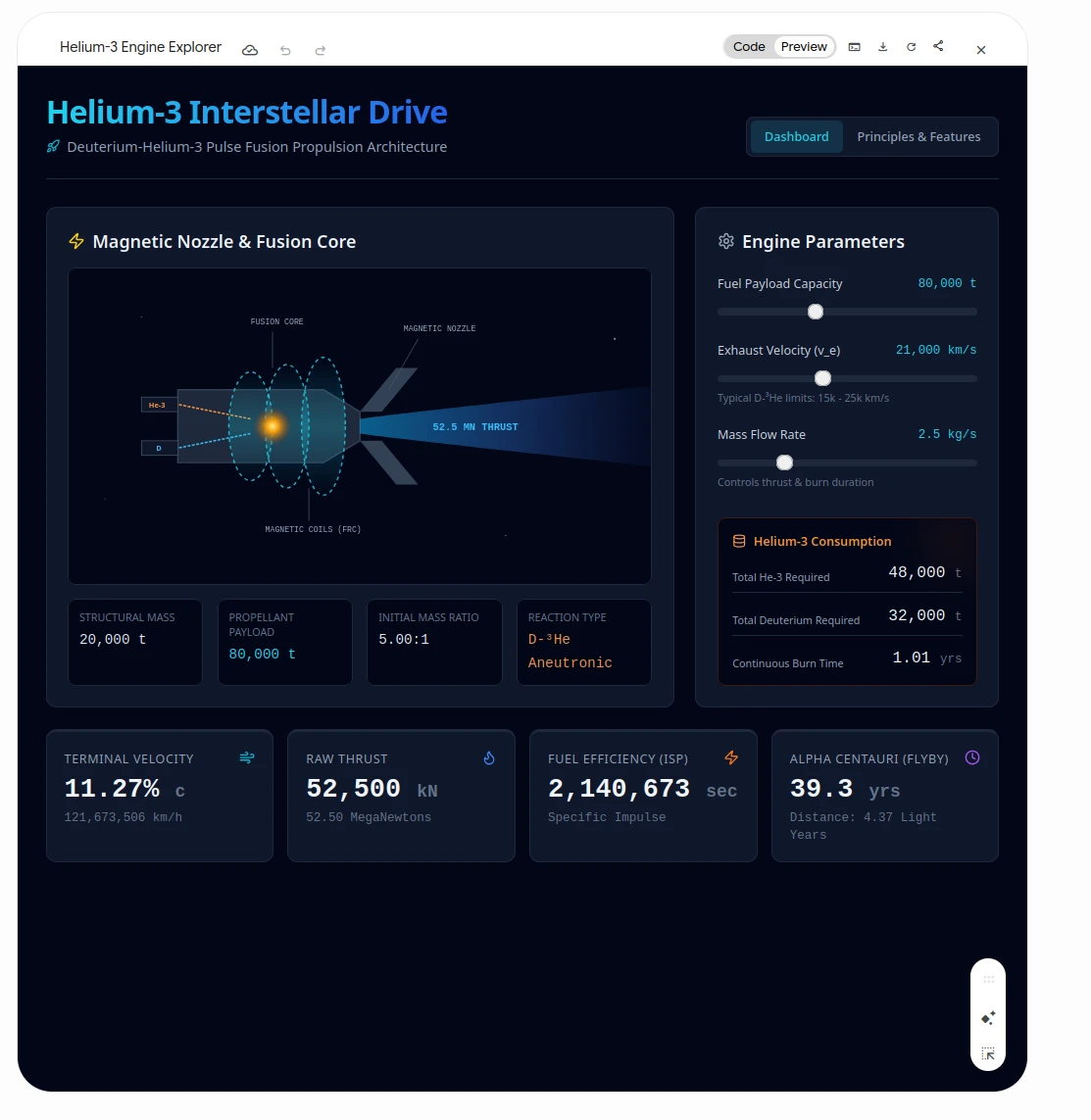
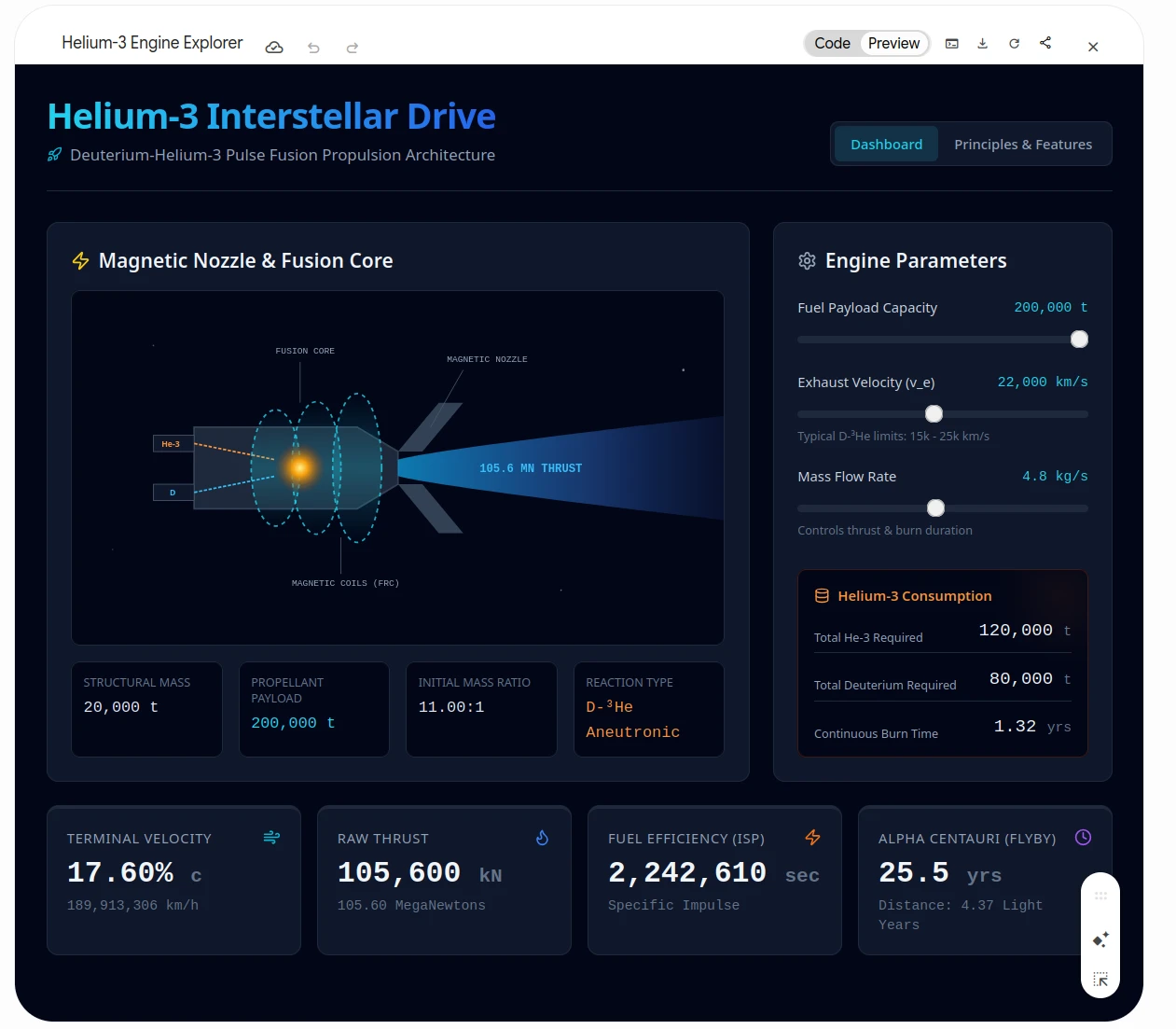
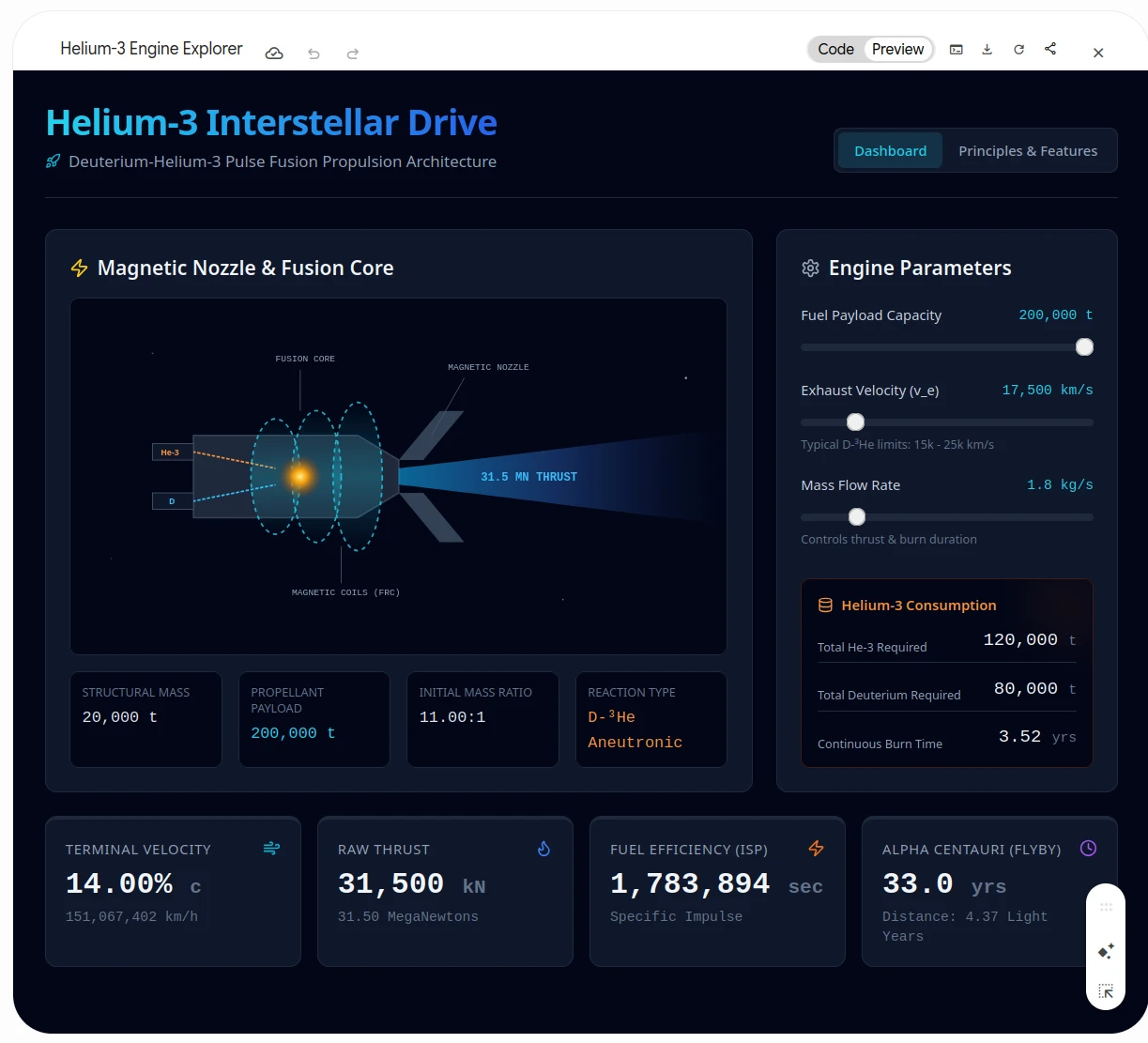
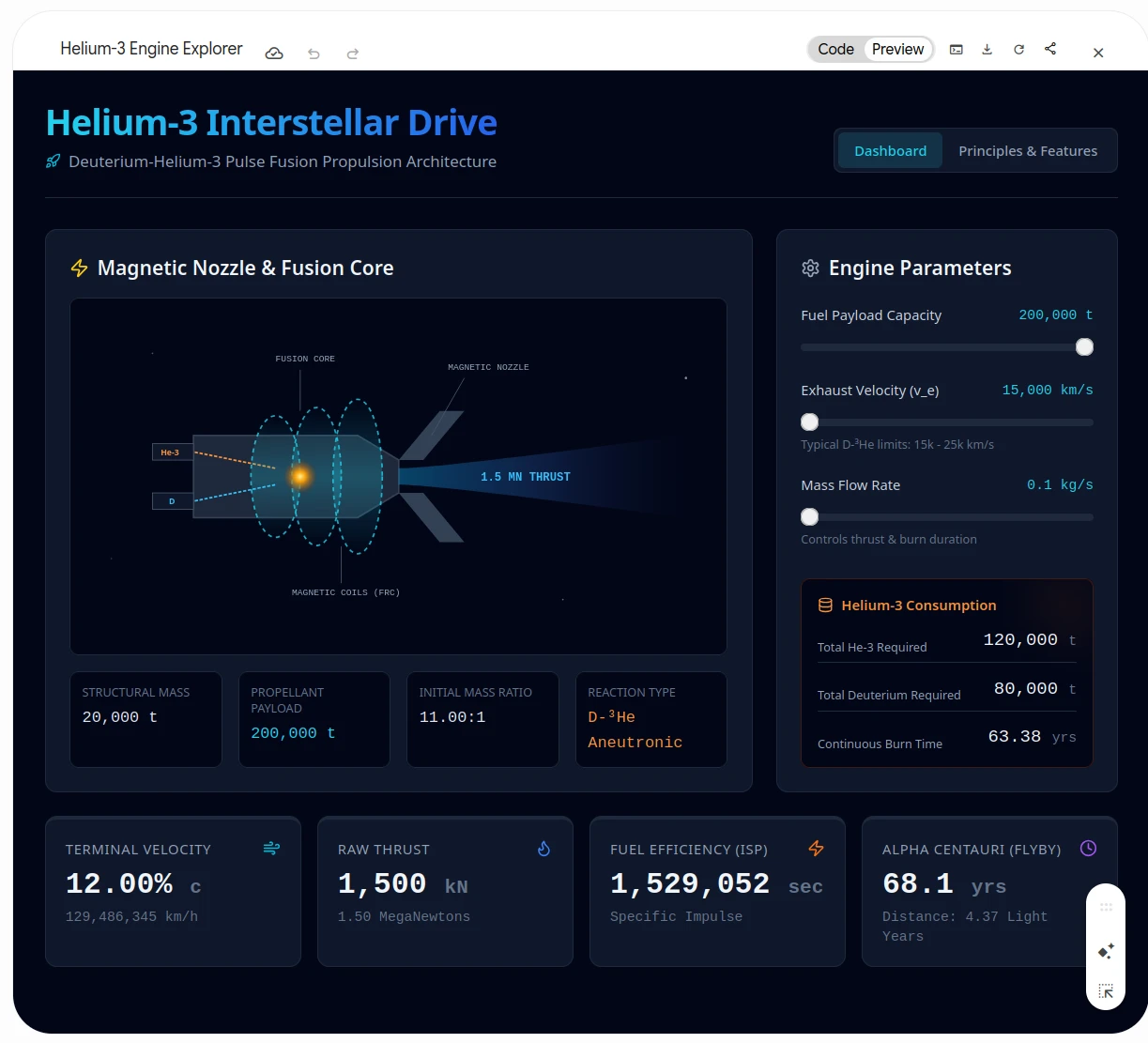
This engine in this simulation offers ratio of trust 1 to 4 which is for a total mas of the space craft 100 tons, 80 tons of fuel, and 20 tons, a structure of the vessel along with an engine. In that configuration has been determinated that this engine would have generated 52,500 Kilonewtons (kN) accelerating spacecraft to a speed 11.27% of light which is 121,673,520 km/h. This amount of fuel might have generate a trust continuously in the space of this vessel for about 1.01 Earth year (370,37 days). The proposed design is intended to be used deep space exploration only.

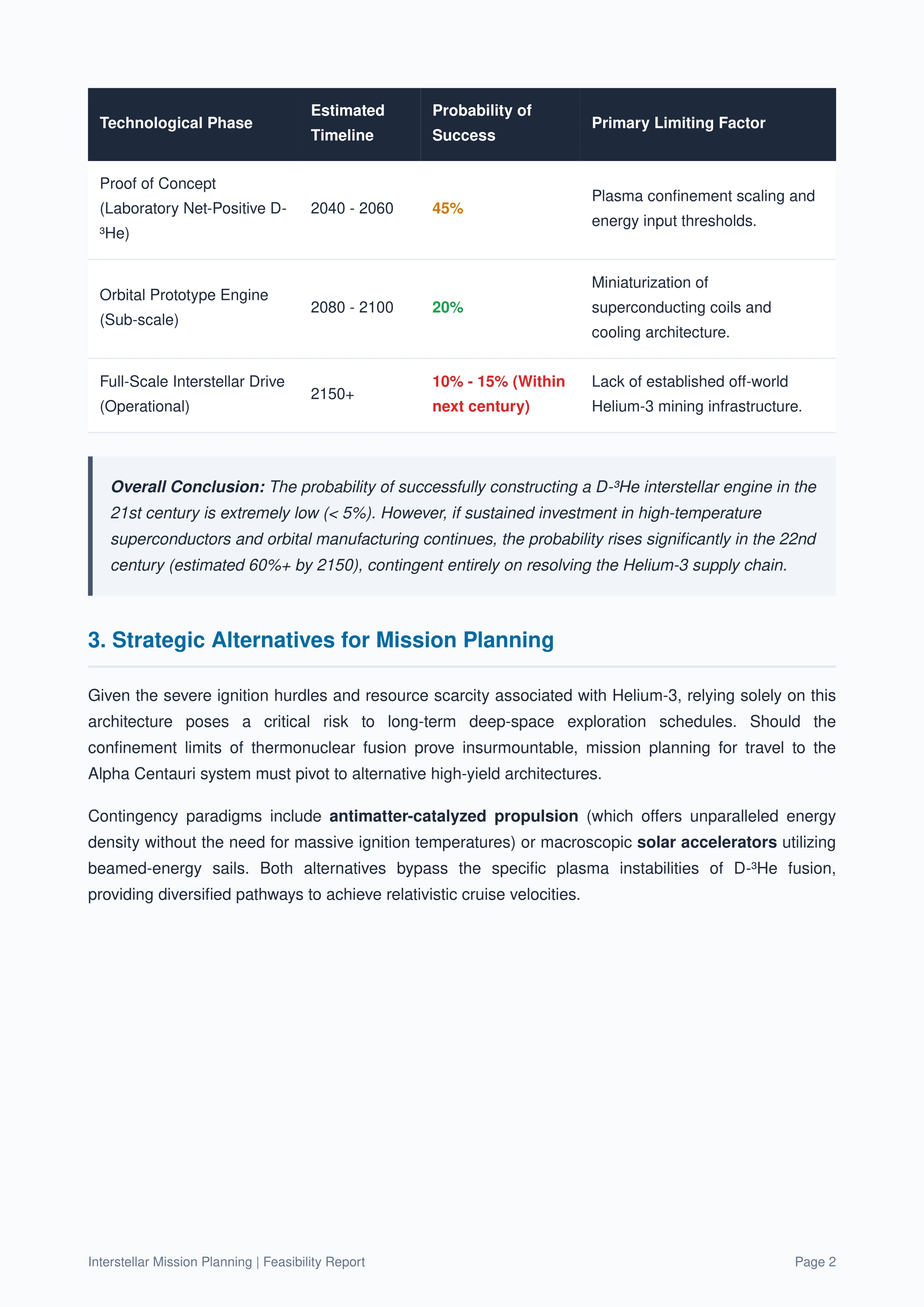
The Helium-3 itself is present in large quantities on the Moon and Deuterium can be produced from sea water. This project has been marked to be successful at rate 60 % by 2150 Earth year time and proof of concept can be ready till 2040 – 2060 Earth year time. Proof of concept can also show in practice efficiency of Helium-3 fusion only and Helium-3 plus Deuterium fusion two potential mixture fuels for thermonuclear engine. However it has to be remembered that based on simulation, known knowledge and know available resources (fuel), the thermonuclear engine wont be more efficient than antimatter engine.
MEDIA SECTION:
Gallery:
video:
Sources:
Google Gemini Red Retti Fieles Cloud Storage DropBox Files Tokamak T-1 Helium-3